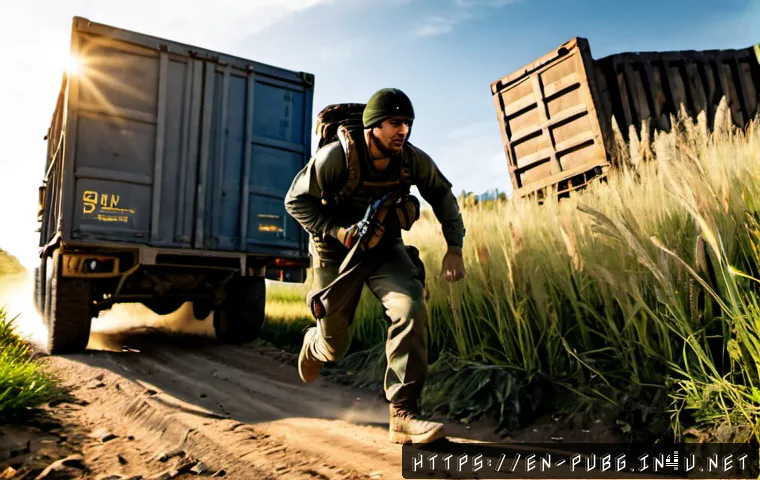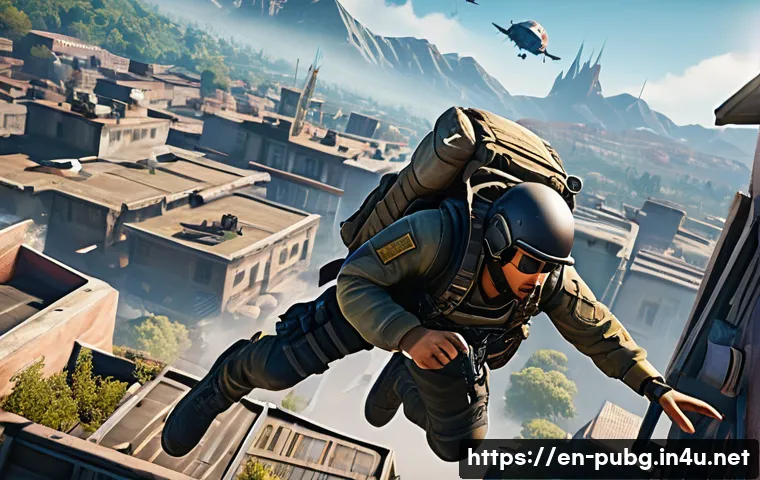
Ever felt that heart-pounding panic when you’re caught in the open, shots ringing out, but you have no clue where they’re coming from? I’ve been there countless times, just pixel-hunting or guessing, only to get eliminated.
But what if I told you there are game-changing tricks that turn those frustrating moments into tactical triumphs? It’s not just about sharp aim; it’s about mastering the art of enemy detection, blending keen visual awareness with an almost psychic sound sense.
Forget just relying on luck; I’ve personally fine-tuned my approach, and trust me, knowing where your opponent is *before* they even know you’re there feels incredibly empowering.
Ready to stop being a target and start hunting like a true pro? Let’s dive in and unlock those secrets!
Hey everyone, it’s your favorite English blog influencer, ready to drop some serious knowledge bombs on how to dominate the battlefield! I’m talking about turning those “where did that shot come from?!” moments into “I knew you were there, buddy!” triumphs.
Trust me, I’ve been on both ends of that spectrum, and it feels a million times better to be the hunter. We’re not just aiming for survival; we’re aiming for tactical mastery.
So, let’s peel back the layers of enemy detection in PUBG and get you spotting like a seasoned pro!
Decoding the Symphony of War: Mastering Audio Cues
You wouldn’t believe how many players overlook the sheer power of sound in PUBG. It’s not just background noise; it’s a constant stream of intel, a symphony of destruction and movement that, once you learn to interpret it, becomes your sixth sense.
I’ve personally found that the moment I started truly *listening* instead of just *hearing*, my gameplay completely transformed. A good headset isn’t just a luxury; it’s practically a cheat code, giving you that critical edge to pinpoint enemy locations and movements before they even register you’re a threat.
Many professional players swear by optimizing their in-game sound settings, often prioritizing sound effects volume and using high-quality headphones with surround sound capabilities to enhance audio positioning.
Seriously, if you’re not using decent headphones, you’re playing at a disadvantage. It’s about more than just volume; it’s about clarity and direction, making those subtle rustles and distant gunfire translate into actionable intelligence.
The Silent Stalker’s Advantage: Footstep Acoustics
Footsteps are probably the most immediate and crucial audio cue you’ll get in close-quarters combat. I can’t tell you how many times a well-timed footstep sound has saved my skin or led me to an easy kill.
The trick is to really train your ears to differentiate not just the direction but also the proximity and even the surface they’re walking on. Is it wood?
Concrete? Grass? Each has a distinct sound, giving you precious seconds to react.
If the sound is louder in your left ear, they’re on your left; same for the right. On maps with snow, like Vikendi, those amplified footstep audio and visible footprints can be a blessing for tracking, or a curse if you’re the one being tracked.
Some players even adjust their EQ settings to boost footstep frequencies (typically between 1000 Hz and 4000 Hz) and cut out other distracting noises, like the concussion effect from grenades, to make these sounds pop more clearly.
This isn’t just about hearing; it’s about anticipating. If I hear footsteps drawing closer, my mind immediately starts cycling through potential angles they might push from, allowing me to pre-aim or reposition defensively.
The Language of Lead: Interpreting Gunfire
Gunshots are chaotic, right? But within that chaos lies a wealth of information. Beyond just hearing a shot, try to discern the *type* of gun, the *distance*, and most importantly, the *direction*.
A rifle shot sounds different from a submachine gun, and each has its own effective range, giving you clues about how they might engage. More critically, when you’re under fire, the “crack” of a bullet breaking the sound barrier near you is different from the actual gunshot.
Focus on the sound of the gun itself, not the bullet snap, to accurately determine the shooter’s origin. Also, don’t forget the muzzle flash! Unless an enemy is using a flash hider or suppressor, their position will often be given away by a bright flash when they fire, especially against darker backgrounds.
I’ve bagged so many kills just by patiently scanning for that tell-tale flash in a chaotic firefight. It’s a game-changer.
Beyond the Horizon: Visual Acuity and Positional Play
While sound gives you the early warning, visuals confirm, refine, and often clinch the deal. Seeing an enemy before they see you is the ultimate tactical advantage, allowing you to choose the engagement, set up an ambush, or simply avoid a fight you can’t win.
It’s not just about having a sharp eye; it’s about knowing *what* to look for and *where*. I always tell my friends that spotting enemies in PUBG is less about raw visual skill and more about pattern recognition and keen environmental awareness.
It’s about spotting things that just don’t belong, that subtle shimmer, that tiny movement that screams “player!”.
The Art of the Pixel Peek: Spotting Subtle Movement
It’s incredible how well players can blend into the environment, especially at a distance. That’s why you need to train your eyes to spot even the tiniest “moving pixels”.
I usually try to keep my crosshair low and swiftly scan the surroundings for any slight movements. It helps to adjust your graphics settings; many pros, including myself, opt for lower graphics quality and higher frame rates because it makes enemies stand out more against a less detailed background.
Increasing your brightness (sometimes up to 150%) can also create better contrast, making enemies appear darker and easier to identify. When you’re scanning, don’t just stare; use quick, deliberate “snaps” of your view, especially in TPP (Third Person Perspective), to cover large areas rapidly and cycle through potential enemy positions.
Using the ‘Alt’ key on PC for a 360-degree free look while running is invaluable for constantly checking your surroundings without changing your character’s movement direction.
Angles of Attack and Defense: Mastering Line of Sight
Understanding angles is critical for both spotting enemies and avoiding being spotted. When I’m moving across the map, I’m constantly evaluating the terrain, trying to keep myself covered as much as possible, whether by a hill, a building, or even a cluster of trees.
The less exposed you are, the fewer angles an enemy has to spot you from, allowing you to focus your vision on fewer potential threat areas. Conversely, when I’m looking for enemies, I often scope out elevated positions or common sniper nests, knowing that these are prime spots for opponents to hold angles on unsuspecting players.
It’s a constant chess match of anticipating where eyes might be.
Camouflage and Cover: Blending In and Breaking Out
Players are smart, and they often use the environment to their advantage for camouflage. It’s why I always recommend looking for “contrast” or “color variations” that don’t match the natural scenery.
An enemy’s clothing or helmet will often stand out, even subtly, against a bush or rock. When I’m in an open field, I don’t just glance; I focus scan around trees, rocks, and structures because nobody stands in the middle of nowhere.
Knowing where players are likely to hide allows me to direct my visual attention more efficiently. And remember, sometimes the best way to avoid being spotted is to *become* the environment – using natural cover and understanding how shadows fall can make you incredibly difficult to find.
The Hunter’s Instinct: Predictive Movement and Map Mastery
Beyond reacting to what you see and hear, true mastery comes from predicting what your opponents *will* do. It’s about developing that uncanny “game sense” that lets you know where enemies are heading, even before they commit.
This instinct isn’t magic; it’s a combination of experience, map knowledge, and a deep understanding of game mechanics like zone shifts. I’ve spent countless hours studying map rotations and player behavior, and let me tell you, that knowledge is just as potent as any weapon.
High-level players aren’t just reacting; they’re predicting, tracking vehicle trajectories, and planning cutoff points based on zone shifts.
Reading the Zone: Anticipating Rotations
The shrinking blue zone isn’t just a threat; it’s a powerful tool for predicting enemy movement. Everyone has to move into the safe zone eventually. By observing where the zone shifts and considering the plane’s flight path, you can often anticipate common rotation routes.
I always try to position myself on the edge of the zone, maintaining good sightlines, so I can “gatekeep” or ambush players who are forced to move into the safe area.
Entering zones 40-60 seconds late, for instance, can be a great tactic for ranking pushes, allowing other teams to fight it out first. It’s about thinking several steps ahead, just like a chess grandmaster.
Hot Drops and High Traffic: Knowing the Danger Zones
Every map has its “hot drop” locations – spots where tons of players land early for high-tier loot and immediate action. Knowing these areas is crucial.
If you’re dropping hot, be prepared for immediate engagements and use your surroundings to gain an early advantage by spotting enemies landing near you.
If you’re trying to play it safe, you know which areas to avoid or approach with extreme caution. Similarly, certain areas like bridges, narrow passes, or specific compounds become high-traffic zones as the game progresses.
I keep a mental map of these bottlenecks and always expect contact there, pre-aiming or setting up ambushes.
The Path Less Traveled: Flanking and Ambush Tactics
Sometimes, the best way to find an enemy is to put yourself in a position they *wouldn’t* expect you to be. This means using less obvious routes, quiet rotations, and understanding how to flank.
I love using unexpected angles to catch enemies off guard. If a squad is pinned down by another, instead of joining the direct firefight, I’ll often try to loop around for a flank, catching them between two fires.
This takes courage and good map awareness, but the payoff is immense. The element of surprise is a powerful weapon, and knowing how to create that surprise by predicting where enemies *aren’t* looking is a skill that comes with practice.
Arming Your Senses: Leveraging Gear for Superior Intel
Let’s be real, you can have all the game sense in the world, but if your gear isn’t pulling its weight, you’re at a disadvantage. This isn’t about spending a fortune, but rather making smart choices that enhance your natural abilities.
I’ve seen players go from struggling to thriving just by upgrading one key piece of equipment. It’s about giving your senses the best possible tools to gather information from the environment.
The Ears Have It: Investing in Quality Audio
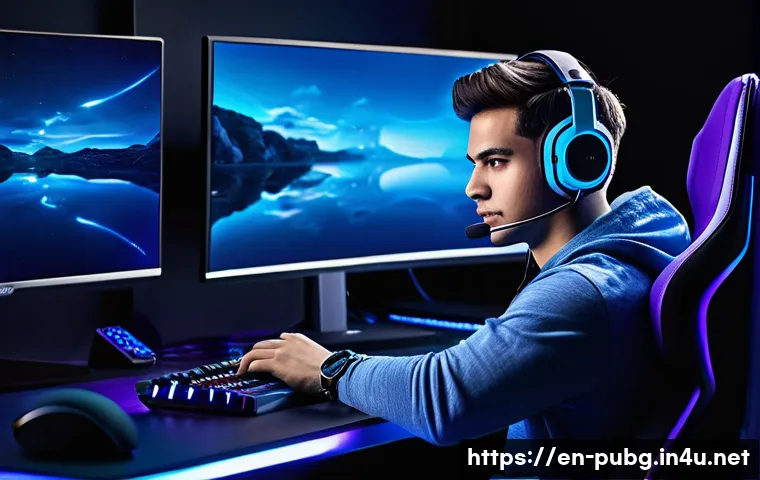
I cannot stress this enough: a good gaming headset is non-negotiable for serious PUBG players. It’s like having radar for your ears. High-quality headsets with surround sound capabilities allow you to hear even the faintest sound cues, from distant footsteps to reloading sounds, and accurately pinpoint their origin.
This isn’t just about immersion; it’s a competitive advantage that directly impacts your kill-to-death ratio and overall win rate. I personally use a headset that offers clear positional audio, and it’s made a monumental difference in my ability to react to unseen threats.
Comfort is also key, as you’ll be wearing these for extended gaming sessions.
Scopes and Spotting: Extending Your Visual Reach
While I love a good 6x or 8x scope for those long-range eliminations, sometimes a less precise scope, like a 2x or 4x, is actually better for initial enemy *detection* at mid-ranges.
They offer a wider field of view, making it easier to spot general movement before you commit to a high-zoom engagement. I always try to have a versatile scope setup, often carrying multiple scopes or swapping them out as needed depending on the situation.
Knowing how to quickly switch between scope sensitivities and using free-look (Alt key on PC) to scan your surroundings while scoped in can help you maintain situational awareness even when zoomed in.
The Utility Belt: Grenades, Smokes, and Vision Denial
It’s easy to think of grenades purely as offensive weapons, but they’re incredible tools for gathering intel and manipulating enemy positions. A well-placed frag can force an enemy out of cover, revealing their location.
Smoke grenades, my absolute favorite, are defensive masterpieces. They can block enemy sightlines, allowing you to rotate safely, revive a teammate, or even push into a compound relatively undetected.
I’ve used smokes countless times to isolate enemies or obscure my movements, then listened intently for panicked footsteps or gunfire as they try to relocate.
Flashbangs are also fantastic for disrupting enemy vision and creating openings for your team to push. They force reactions, and reactions often betray positions.
| Perk | Benefit to Enemy Detection | Optimal Use Case |
|---|---|---|
| High-Quality Headset | Precise directional audio, clear footsteps, distant gunshots | Close-quarters combat, urban areas, early warnings |
| 2x/4x Scopes | Wider field of view, easier general movement spotting | Mid-range engagements, scanning open fields |
| Smoke Grenades | Deny enemy vision, create cover for rotations/revives | Open field rotations, reviving teammates under fire |
| Frag Grenades | Force enemies out of cover, reveal positions | Clearing buildings, pressuring entrenched enemies |
Mind Games and Momentum: Psychological Warfare on the Battlefield
PUBG isn’t just about shooting; it’s a high-stakes psychological game. Understanding your opponent’s likely reactions, baiting them into revealing themselves, and maintaining a calm, focused mindset can be just as crucial as having a quick trigger finger.
I’ve learned that controlling the mental aspect of the game often dictates the flow of the entire engagement.
Patience as a Weapon: Waiting for the Perfect Moment
Sometimes, the best move is no move at all. I’ve personally had countless moments where I’ve held a position for what felt like ages, only for an unsuspecting enemy to wander right into my crosshairs.
Impatience is a killer in PUBG. If you hear footsteps or spot a distant movement, resist the urge to immediately shoot. Instead, observe, predict their path, and wait for them to commit to a vulnerable position.
The longer you can remain undetected, the greater your advantage will be when you finally decide to strike. Staying calm under pressure, especially when hearing footsteps, helps you determine enemy numbers and potential actions, allowing for better strategic planning.
The Bait and Switch: Luring Opponents into Traps
A little bit of calculated aggression can go a long way. Sometimes, I’ll deliberately make a sound or show myself for a split second to draw fire or pique an enemy’s curiosity.
People get greedy for kills. They’ll push, they’ll peek, and that’s when you have them. I’ve used this to great effect in urban areas, peeking a window just enough to get a few shots off, then immediately repositioning to a completely different angle.
The enemy will often overcommit to the last known position, leaving themselves exposed to my new line of sight.
Controlling the Narrative: Dictating the Engagement
The player who dictates the terms of the engagement usually wins. This means choosing when and where to fight. If you’ve spotted an enemy, you now have the power.
Do you push immediately? Do you wait for them to move into a disadvantageous position? Do you use utility to flush them out?
My experience has taught me that playing aggressively *after* you’ve gathered intel is far more effective than blind aggression. You’re not just reacting; you’re orchestrating the fight, forcing your opponent to play *your* game.
The Unseen Hand: Environmental Storytelling and Clues
The map itself is constantly telling you a story about recent events. Every open door, every discarded item, every bullet hole is a clue, a breadcrumb trail left by other players.
Learning to “read” these environmental details is like being a detective in the game, allowing you to track movements and infer enemy presence even when you don’t see or hear them directly.
This takes a sharp eye and a lot of playtime, but it’s a skill that pays off immensely.
Open Doors and Broken Windows: Signs of Recent Passage
This is one of the most basic yet overlooked clues. When I’m approaching a compound or building, the first thing I check are the doors and windows. An open door in an otherwise closed building is a dead giveaway that someone’s been there recently.
Similarly, a broken window implies someone either entered or exited that way, or perhaps engaged in a firefight from that position. I remember once I saw a pattern of open doors in a city that abruptly stopped, and sure enough, an enemy was lurking in the very next building, thinking they were hidden.
It’s a classic signpost.
The Loot Trail: What They Left Behind
Players pick up loot, right? So if I enter a building or an area and see high-tier loot still lying around, that’s often a good sign it hasn’t been touched, or that players were extremely rushed.
Conversely, if I find a perfectly good weapon or a level 3 vest still on the ground, but all the bandages and ammo are gone, it tells me someone was here, but they were picky, or they were already fully kitted.
Even a vehicle not in its natural spawn position can signal enemies nearby. These subtle cues allow me to build a picture of player activity in the area and adjust my approach accordingly.
Bullet Holes and Grenade Scars: Tracing Past Engagements
The aftermath of a firefight can provide invaluable information. Bullet holes on walls, grenade scorch marks, or even destroyed vehicles tell you that a battle recently took place.
More importantly, they can indicate the direction of the engagement. By examining the angles of bullet impacts, you can sometimes figure out where players were positioned during the fight.
If I see fresh bullet holes facing a specific direction, I immediately know to be wary of that angle, anticipating where the surviving players might have relocated.
It’s like a silent replay of the chaos.
Team Echoes: Synchronizing Senses for Collective Dominance
In squad play, enemy detection isn’t just an individual effort; it’s a team sport. Combining the senses of four players exponentially increases your ability to locate and eliminate threats.
Effective communication is the glue that binds this collective awareness, turning a group of individuals into a formidable, coordinated hunting unit. I’ve seen even the best players struggle when their team communication breaks down, and conversely, less skilled teams achieve incredible victories through perfect synergy.
Callouts That Count: Precision in Communication
Good communication isn’t just talking; it’s about being clear, concise, and accurate. When I spot an enemy, my callout includes direction (using compass bearings), distance (e.g., “150 meters, two enemies”), and descriptive landmarks (e.g., “by the big rock,” “on the two-story building”).
Vague callouts like “enemy over there!” are practically useless. The in-game ping system is a fantastic tool for this; a quick double-tap on the mouse wheel can mark an enemy’s exact location on the map for your teammates, especially when you can’t verbally describe it.
Remember, the goal is to transmit as much critical information as possible in the shortest amount of time.
Coordinated Peeks and Pushes: Sharing the Load
When you have multiple sets of eyes, you can cover more ground and more angles. In a coordinated push, one player might bait shots while others peek from different angles to get the trade or find the enemy’s exact position.
This often means “slicing the pie” on building entrances, clearing one angle at a time, or having teammates cover different windows. I often coordinate with my squad, saying, “I’ll cover the left window, you watch the door,” or “I’m going to throw smoke for cover; push when it pops.” This teamwork minimizes exposure and maximizes your chances of spotting an enemy who might be focused on only one angle.
The Buddy Never go alone, especially in uncertain territory. In a city, if you don’t know it’s clear, stick close to a teammate. If one of you gets into trouble, the other is there to provide cover, trade kills, or revive. This “buddy system” extends to general movement across the map. While one player is scanning a distant ridge, another might be watching the immediate flanks. If I’m driving a vehicle, my teammates are constantly scanning from their windows, calling out anything suspicious. This collective vigilance ensures that fewer blind spots exist, increasing the chances of early enemy detection and overall squad survival.
Wrapping Up
And there you have it, folks! We’ve journeyed deep into the art of enemy detection in PUBG, uncovering everything from the subtle whispers of footsteps to the grand symphony of team coordination. Mastering these skills isn’t just about getting more kills; it’s about elevating your entire game, transforming you from a mere survivor into a tactical maestro. Keep practicing, keep listening, and keep those eyes peeled – because the battlefield is always talking, and now you know how to truly understand its language. Go forth and conquer!
Useful Info to Keep in Mind
1. Invest in a quality gaming headset and fine-tune your in-game audio settings; it’s your most critical early warning system.
2. Practice spotting subtle movements by adjusting your monitor brightness and reducing in-game graphical clutter for better enemy contrast.
3. Always be thinking about the blue zone’s next shift to predict enemy rotations and position yourself strategically to intercept them.
4. Communicate constantly and clearly with your squad, using precise callouts to share intel and coordinate movements effectively.
5. Cultivate patience; sometimes waiting for the perfect moment to strike, or baiting an enemy into revealing themselves, is far more effective than rushing in.
Key Takeaways
Becoming a master of enemy detection in PUBG is a holistic journey that combines keen auditory and visual perception with strategic thinking and effective teamwork. It’s about not just reacting to threats, but anticipating them, using everything from your gear to your understanding of player psychology. Embrace these principles, and you’ll find yourself dominating the battlefield with newfound confidence and an uncanny ability to spot enemies before they even know you’re there.
Frequently Asked Questions (FAQ) 📖
Q: My sound cues always feel off. How can I actually “hear” enemies effectively and stop getting flanked?
A: Oh, I totally get this! It’s one of the most frustrating things, isn’t it? You think you heard something, but then BAM, you’re eliminated from an angle you never saw coming.
I’ve been there so many times, blaming my headset or my ears, only to realize it wasn’t just about the hardware. While a good gaming headset is a game-changer – seriously, investing in one with decent spatial audio can feel like unlocking a superpower – it’s only half the battle.
What I personally found made the biggest difference was diving deep into my in-game audio settings. Many games have options for “HRTF” or “3D Audio” which, when enabled, truly help you pinpoint sounds vertically and horizontally.
Mess around with those, and don’t be afraid to lower music and voice chat volumes to prioritize crucial sound effects like footsteps, reloads, or ability activations.
Beyond settings, it’s about active listening. I used to just passively hear, but now I try to predict where sounds should be coming from based on map knowledge and the flow of the game.
If I hear a faint footstep to my left, I immediately start clearing that corner mentally. It’s like training your brain to become a human radar, and trust me, when you start nailing those sound-based pre-fires, it’s incredibly satisfying.
Q: I’m constantly scanning the screen, but enemies still seem to pop out of nowhere.
A: re there specific visual techniques or monitor setups pros use to spot opponents faster? A2: This is another classic! We’ve all felt that moment of “how did I not see them there?!” It’s not just about having your eyes glued to the screen; it’s about what you’re looking for and how you’re looking.
From my own experience, one of the biggest leaps in visual detection came from understanding “pixel advantage” and crosshair placement. Instead of just randomly scanning, try to keep your crosshair at head height where an enemy is most likely to appear, especially when moving around corners.
This means fewer micro-adjustments and faster target acquisition. And honestly, a high-refresh-rate monitor (think 144Hz or 240Hz) isn’t just a luxury; it genuinely smooths out enemy movement, making them less ‘blurry’ and easier to track, especially in fast-paced shooters.
But hardware aside, practicing “pre-aiming” and knowing common enemy push routes on each map is crucial. I’ve spent countless hours in custom games just walking routes, imagining where an enemy might peek, and adjusting my aim.
It’s not about seeing them as much as it is about expecting them. Also, pay attention to subtle environmental cues: a disturbed bush, a door slightly ajar, or even just a shadow.
These tiny details are often the tell-tale signs that someone is, or was, there. It takes time, but consciously practicing these habits will turn you into a spotting machine.
Q: Beyond just aim and reflexes, how do I develop that almost ‘sixth sense’ for enemy positions that top players seem to have?
A: Ah, the mythical “sixth sense”! It’s not magic, though sometimes it feels like it, right? What you’re really talking about is superior game sense and predictive awareness, something I’ve worked tirelessly on.
For me, it boils down to two main things: deep map knowledge and understanding player psychology. First, map knowledge isn’t just knowing where the health packs are; it’s understanding typical enemy rotations, common camping spots, choke points, and flanking routes.
After hundreds of hours on a single map, I start to internalize these patterns. If I see one enemy on the left, my brain immediately starts calculating where their teammates might be or will be to support them.
Second, it’s about predicting player behavior. Most players, myself included when I’m not careful, fall into predictable patterns. Are they aggressive?
Passive? Do they always push the same lane? If you knock down an opponent, where will their squad try to revive them?
I often ask myself, “If I were the enemy, what would I do next?” This kind of analytical thinking, even in the heat of a firefight, gives you an incredible edge.
It allows you to anticipate pushes, set up ambushes, and even make calculated retreats before danger is even visible. It’s a skill cultivated through relentless play, critical self-reflection after every death, and actively trying to learn from every encounter, good or bad.
It’s a journey, but every successful prediction feels like a little victory in itself.