Alright, let’s be real for a moment. We’ve all been there, scrambling for loot in those frantic opening minutes of a PUBG match. You grab your favorite AR, maybe an M416 or a SCAR-L, and then the real game begins: finding those crucial attachments.
But with so many grips, muzzles, and stocks scattered across Erangel, Miramar, and every other map, it’s easy to get lost in a sea of options. Does the Compensator *really* make that much difference?
Is a Half Grip better than an Angled Grip now? Trust me, after countless hours dropping into the Battlegrounds and experimenting with every single combination, I’ve seen firsthand how the right attachments can absolutely transform your weapon from a wild beast into a laser-accurate machine.
The meta shifts, new updates tweak stats, and what was once king might now just be “okay.” Staying on top of these changes isn’t just about preference; it’s about securing those extra eliminations and ultimately, that sweet Chicken Dinner.
If you’re tired of guessing and want to truly master your weapon loadouts in today’s PUBG landscape, you’ve come to the right place. I’ve broken down the exact effects of each attachment, complete with personal insights and the latest pro-player strategies.
Let’s find out exactly how to optimize your arsenal for maximum impact and dominate every fight!
Muzzles: Taming the Recoil Beast
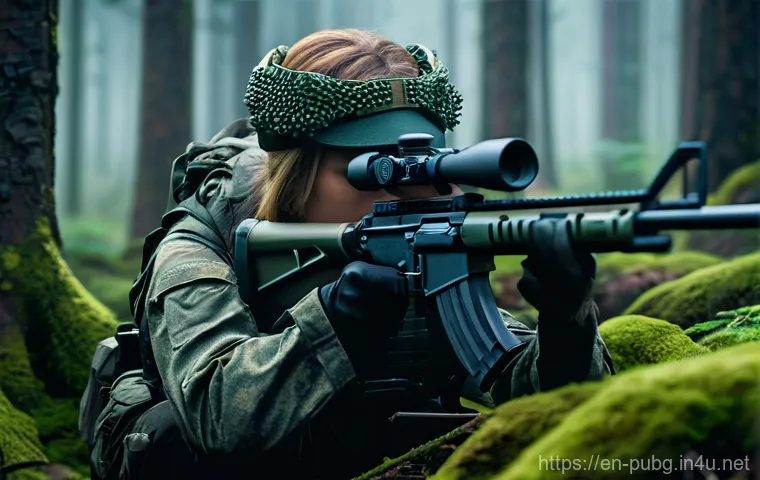
Oh, the muzzle attachments. These little wonders are often the first thing I look for after landing. It’s truly amazing how much difference a tiny piece of metal can make in controlling that kickback, especially when you’re caught in a frantic spray.
I mean, think about it: one moment your M416 is spitting bullets all over the shop, and the next, with the right muzzle, you’re practically painting targets with it.
It’s not just about reducing recoil; it’s about giving you the confidence to commit to those longer sprays, knowing your shots are actually going to connect.
I remember a particularly intense final circle on Erangel, pinned down by a squad. My partner went down, and it was just me against three. If I hadn’t found that compensator early on, there’s no way I would’ve been able to hold that angle and spray them down one by one as they pushed.
That feeling of hitting those headshots consistently because your weapon isn’t jumping all over the place? Pure bliss. It’s moments like those that really highlight the impact of something as seemingly simple as a muzzle.
The Silent Assassin: Suppressors
There’s something incredibly satisfying about dropping an enemy without giving away your position, isn’t there? That’s where suppressors shine. For me, they’re indispensable, especially in the early game or when I’m trying to play a bit more stealthily.
Imagine you’re rotating through Pochinki, you spot an unsuspecting player, and *pop-pop-pop*. They’re down, and their teammates are left scrambling, completely bewildered about where those shots came from.
I’ve had so many instances where a suppressor allowed me to pick off two or even three enemies from a squad before the last one even knew what hit them, giving my team a massive advantage.
While they don’t help with recoil, the tactical edge they provide is often worth the trade-off, especially if you have good recoil control already or are using a lower-recoil weapon.
It’s all about surprise and misdirection, and a good suppressor is your best friend for that.
The Recoil Renegades: Compensator vs. Flash Hider
Now, for pure recoil reduction, it’s almost always a showdown between the compensator and the flash hider. For most assault rifles, the compensator is king for reducing both vertical and horizontal recoil.
When I’m gearing up for mid-to-late game engagements, especially on maps like Miramar where longer sightlines are common, a compensator is my absolute priority.
The difference in my spray control with and without it is night and day. I used to think the flash hider was just “good enough” because it also hid the muzzle flash, which can give away your position.
And while that’s true, especially in low-light situations, I’ve personally found that the raw recoil reduction from the compensator simply leads to more consistent hits.
If I have to choose, and I almost always do, the compensator wins every time, allowing me to be much more aggressive in my engagements. Hiding muzzle flash is a nice bonus, but landing shots is paramount.
Grips: Your Handshake with Victory
Grips, my friends, are where personal preference really starts to come into play, but also where optimizing your weapon becomes an art form. It’s not just about slapping on the first grip you find; it’s about understanding how each one fundamentally alters the feel and behavior of your gun.
I’ve spent countless hours in the training ground, meticulously testing every grip on various weapons, trying to find that sweet spot for my own playstyle.
And let me tell you, the right grip can transform a jittery mess into a stable, manageable laser beam. It feels like you’ve suddenly gained an extra limb that just naturally guides your aim.
I remember one time, I was experimenting with the Half Grip on my Beryl, and initially, I was skeptical. But after a few deathmatches, I noticed my sustained sprays were incredibly tight, far more than I’d ever managed with a Vertical Grip.
It completely changed my approach to close-quarters combat with that particular weapon. Finding your perfect grip isn’t just about reading stats; it’s about muscle memory and what feels right in your hands when the pressure is on.
Vertical Grip: The Old Faithful
The Vertical Grip is, for many, the go-to attachment, especially for players who prefer to manage vertical recoil above all else. And for good reason!
It significantly reduces vertical kick, making it a solid choice for weapons with predictable vertical recoil patterns. When I first started playing PUBG, this was the grip I swore by for every single AR.
It just felt stable and reliable. If you’re someone who often taps or bursts at medium range, or struggles with the initial vertical climb of your weapon, the Vertical Grip will feel incredibly comfortable.
It’s like having a steady hand guiding your weapon upwards, allowing you to focus more on horizontal tracking. For weapons like the AKM, which inherently has a strong vertical pull, a Vertical Grip can make a world of difference in bringing it under control, allowing for more precise shots.
Angled vs. Half Grip: The Modern Dilemma
This is where things get interesting, and the meta has certainly shifted over time. The Angled Grip is fantastic for reducing horizontal recoil and speeding up your aim-down-sights (ADS) time.
For weapons that sway a lot horizontally or for players who prefer aggressive peeking and quick scoping, it’s a brilliant choice. I often lean towards the Angled Grip when I’m using something like an M416 or SCAR-L, especially if I’m playing on maps with lots of quick engagements.
However, the Half Grip has really grown on me. It offers a balance of recoil control and recovery, making sustained sprays incredibly smooth. It reduces both vertical and horizontal recoil, but its real magic lies in recoil recovery.
I’ve found it to be exceptional on guns like the Beryl or AKM, where you’re constantly trying to bring the weapon back to target after each shot or burst.
The reduced sway means your crosshair just feels “stickier” to the enemy. Honestly, for raw spray potential, I’m often picking the Half Grip these days, especially on my primary AR.
Light Grip and Thumb Grip: Niche, But Nifty
Then we have the more specialized grips like the Light Grip and the Thumb Grip. The Light Grip reduces recoil recovery time, which sounds great, but it slightly increases initial shot recoil.
It’s truly a niche pick, mainly for single-shot weapons like the Mini14 or SKS, where you want to spam shots as quickly and accurately as possible without much sustained spray.
I’ve experimented with it on ARs, but I consistently found myself struggling with the initial kick. The Thumb Grip, on the other hand, reduces vertical recoil and, crucially, significantly speeds up ADS time.
This makes it a surprisingly effective choice for SMGs or even ARs if your playstyle prioritizes lightning-fast target acquisition over sustained spray control.
I’ve seen some pro players absolutely dominate with a Thumb Grip on their UMP or Vector for aggressive close-quarters pushes, essentially turning their weapon into an instant-aiming machine.
It’s all about finding what complements *your* specific engagement style.
Stocks: Stability in the Chaos
Stocks are often overlooked, yet they play a crucial role in overall weapon stability and handling. It’s not just about recoil; it’s about making your gun feel like a natural extension of your body, reducing sway, and making those sustained engagements less of a wrestling match.
I used to completely disregard stocks, thinking they made only a minimal difference, but boy, was I wrong. Once you start paying attention to that subtle weapon sway when you’re scoped in, or how quickly your aim settles after a burst, you realize just how much these attachments contribute.
A well-chosen stock, paired with the right grip, can make your weapon feel incredibly “crisp” and responsive. It allows you to maintain focus on your target, rather than fighting your gun.
The Tac Stock: An M416’s Best Friend
If you’re running an M416, the Tactical Stock is pretty much non-negotiable in my book. It significantly reduces weapon sway and improves recoil recovery, making that already versatile rifle feel even more stable and laser-like.
I’ve felt the difference firsthand countless times. Without it, the M416 feels just a tiny bit looser, a bit more prone to horizontal jitter, especially during longer sprays.
With the Tac Stock attached, it transforms into an incredibly reliable and controllable weapon for almost any range. It’s like the final piece of a puzzle, bringing all the other attachments together to create a harmonious shooting experience.
If I’m lucky enough to find one early, I know my M416 is going to be a formidable force for the rest of the match.
Cheek Pad: For the Sniping Savant
For those of us who love to pick off enemies from a distance, the Cheek Pad is an absolute must-have for DMRs and sniper rifles. It reduces scope sway and improves recoil control on these precision weapons, which means your follow-up shots are much faster and more accurate.
When I’m trying to hit those pixel-perfect headshots with an SKS or Mini14, that reduction in sway is paramount. It allows you to hold your breath for longer, make those precise adjustments, and track moving targets more effectively.
I’ve had many moments where I lined up a shot, took it, and immediately followed up with another, thanks to how quickly the scope settled with a Cheek Pad.
It gives you that extra fraction of a second to re-acquire your target and secure the elimination, especially when you’re dealing with high-stakes long-range engagements.
Magazines: More Bullets, More Booms
This might sound obvious, but having more bullets in your magazine can be the difference between winning and losing a firefight. I can’t even count how many times I’ve found myself in a sticky situation, emptying a standard magazine into an enemy, only to run out of bullets just as their teammate pushes.
That split second it takes to reload often means game over. Magazines are often taken for granted, but their impact on sustained damage and the ability to wipe a squad is immense.
It’s not just about quantity; it’s about the psychological advantage of knowing you have enough lead to suppress, damage, and finish off multiple targets without that frantic, vulnerable reload animation kicking in.
Extended Mag: The Lifeline in a Firefight
The Extended Magazine is, without a doubt, a top-tier attachment. More bullets per mag mean fewer reloads and more sustained fire, which is crucial in team fights.
Imagine you’re pushing a building, and suddenly two enemies peek. With a standard 30-round mag, you might get one down, but then you’re exposed during a reload.
With an Extended Mag, you can potentially down both and still have rounds left for a third. I always prioritize finding an extended mag for my primary weapon because it simply increases your combat effectiveness drastically.
It gives you that peace of mind that you can spray a little longer, lay down more suppressive fire, or just simply have more chances to hit your shots without interruption.
Quickdraw Mag: Speed is King
The Quickdraw Magazine, while not adding capacity, significantly reduces reload time. For shotguns, SMGs, or even some ARs if you’re consistently engaging in very short, bursty fights, a Quickdraw can be incredibly powerful.
I’ve found it particularly useful on weapons like the Uzi or Vector where you burn through ammo in a blink. Being able to reload in what feels like an instant can mean the difference between getting off a second spray and being downed.
I often pair a Quickdraw with an Extended Mag (creating an Extended Quickdraw Mag) for the best of both worlds – more bullets *and* faster reloads. If I have to choose between a plain Extended or a plain Quickdraw, and I know I’ll be in many close-range, high-action fights, sometimes the Quickdraw alone can be a game-changer.
Sights and Scopes: Precision for Every Range
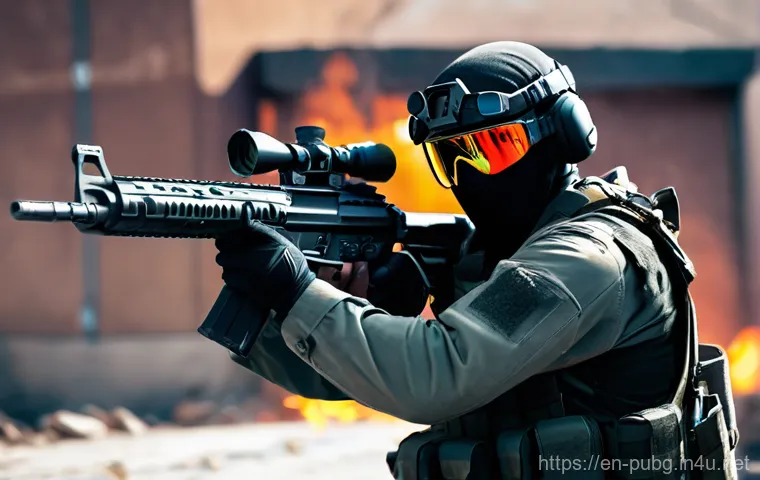
When it comes to hitting your targets, your choice of sight or scope is paramount. It’s not just about magnification; it’s about clarity, target acquisition speed, and what feels comfortable for *your* eyes.
I’ve tried every combination imaginable, from the basic Red Dot to the mighty 8x, and I’ve learned that the “best” scope isn’t always the highest magnification.
It’s about matching the scope to the weapon, the situation, and your personal aiming style. There’s nothing more frustrating than having perfect recoil control but struggling to see your target through a cluttered optic or a scope that’s too powerful for the range.
Red Dot vs. Holographic: Close-Quarters Comfort
For close-quarters combat, it almost always boils down to the Red Dot Sight or the Holographic Sight. The Red Dot offers a clear, unobstructed view with a simple dot for aiming.
I personally prefer the Red Dot for its minimalist design; it feels like it offers the widest peripheral vision, which is crucial in tight indoor fights or when sweeping an area.
The Holographic, while a bit bulkier, provides a larger reticle that some players find easier to pick up quickly, especially when hip-firing or snap-aiming.
I’ve gone back and forth between them, but my muscle memory generally defaults to the Red Dot these days. It just feels cleaner. It’s truly a personal preference here, so grab both in the training ground and see which one lets you acquire targets faster.
Higher Magnification: Spotting the Pixel
When you start looking beyond the close-range, you’re entering the realm of 2x, 3x, 4x, and even 6x or 8x scopes. For mid-range engagements, a 2x or 3x scope on an AR can be incredibly effective, allowing you to track targets with precision without being overwhelmed by too much zoom.
My personal sweet spot for an AR is usually a 3x or a 4x, as it provides enough magnification for those tricky 100-200 meter shots while still being manageable for closer range if needed.
For DMRs and sniper rifles, you’ll naturally want higher magnifications. A 6x or 8x is essential for long-range eliminations. The trick with these is learning how to compensate for bullet drop and lead moving targets, which is an entirely different skill set.
I’ve found that spending time on long-range targets in the training map truly helps hone that muscle memory for different magnifications.
Underappreciated Attachments: The Hidden Gems
Sometimes, the attachments that don’t scream “game-changer” are the ones that quietly enhance your performance. We often focus so much on the big three – muzzles, grips, and scopes – that we forget about those little extras that can fine-tune your weapon to perfection.
These might not win you a firefight outright, but they certainly give you an edge, especially in specific scenarios or for particular playstyles. I’ve been in countless situations where one of these “minor” attachments ended up saving my skin or helping me secure a difficult elimination.
It’s about optimizing every single slot on your weapon, leaving no stone unturned in your quest for that chicken dinner.
Laser Sight: Hip-Fire Hero
The Laser Sight. Ah, this one is a bit controversial, isn’t it? It reduces hip-fire spread, and while many players dismiss it, I’ve found it to be incredibly useful for aggressive pushes and close-quarters engagements, especially with SMGs.
When you’re running and gunning inside a building, or you get pushed unexpectedly, being able to accurately spray from the hip without having to fully ADS can be a life-saver.
I’ve wiped entire squads indoors because I could maintain movement and accurately spray without being locked into ADS. Yes, the laser itself can give away your position if you’re not careful, but if you’re already committed to an aggressive push, the benefits outweigh the risks.
Try it on an UMP or Vector; you might be surprised at how effective your hip-fire becomes.
Canted Sight: The Close-Range Switcher
The Canted Sight is, for me, one of the most brilliant additions to PUBG. It allows you to have a secondary, close-range optic on your weapon alongside a high-magnification scope.
This means you can run an 8x on your AR for long-range engagements, and instantly switch to a Red Dot for close-quarters threats without having to swap weapons or attachments.
I cannot stress enough how often this has saved me. Imagine you’re sniping a distant enemy, and suddenly someone pops up 20 meters away. Instead of fumbling to switch to your secondary weapon, you just hit a button, and *boom*, you’re instantly on a Red Dot, ready to spray.
It’s seamless, fast, and incredibly intuitive. It basically gives you the best of both worlds on a single primary weapon, reducing your vulnerability in transitional moments.
Strategic Loadouts: Beyond Just the Stats
Choosing attachments isn’t just about raw numbers; it’s about building a loadout that complements your playstyle, the map you’re on, and the ever-shifting flow of a PUBG match.
I’ve seen players with “suboptimal” attachments absolutely dominate because they understand how their chosen setup works for *them*. It’s not a one-size-fits-all situation; it’s about synergy and adaptability.
Your loadout should feel like an extension of your intentions on the battlefield, whether you’re an aggressive pusher, a tactical sniper, or a supportive flanker.
This is where the real depth of PUBG’s attachment system comes into play – crafting something unique and effective for you.
Adapting to the Map and Your Playstyle
This is huge. Are you dropping into Erangel, where a mix of ranges is common, or Miramar, where long-range engagements are king? Your attachment choices should reflect this.
On Miramar, for example, I’m almost always prioritizing higher magnification scopes and attachments that aid long-range accuracy and control. On Sanhok, however, where fights are frequent and up close, I’ll lean heavily towards faster ADS and hip-fire improving attachments.
Your playstyle also dictates a lot. If you’re an aggressive front-liner, you might prioritize quickdraw mags and angled grips. If you prefer to hold angles and play more defensively, perhaps a vertical grip and compensator for precise peeking shots.
Understanding the nuances of each map and honest self-assessment of your own strengths and weaknesses will guide your attachment choices more than any tier list ever could.
My Go-To Combinations and Why
After countless matches, I’ve developed a few go-to combinations that I swear by, depending on the weapon and my role. For an M416, I almost always aim for a Compensator, Vertical Grip, Extended Quickdraw Mag, Tactical Stock, and a 3x or 4x scope with a Canted Sight.
This setup makes the M416 incredibly stable and versatile for both mid-range sprays and quick close-range switches. If I’m running a Beryl, which is a beast to control, I’ll often go for a Compensator, Half Grip, and Extended Quickdraw Mag, sometimes opting for a Red Dot because I’ll be using it more aggressively in close quarters.
For sniper rifles like the Kar98k or M24, it’s always an 8x scope, Cheek Pad, and a Suppressor for those silent, satisfying headshots. These are not gospel, mind you, but they’ve been consistently effective for me over thousands of hours in the Battlegrounds.
| Attachment Type | Primary Benefit | Common Use Case | My Personal Take |
|---|---|---|---|
| Compensator | Reduces vertical & horizontal recoil | ARs, DMRs, SMGs for spray control | Essential for most ARs, absolute must-have. |
| Suppressor | Silences shots, hides muzzle flash | All weapon types for stealth | Great for early game picks or stealth plays. |
| Vertical Grip | Reduces vertical recoil | ARs with high vertical kick (AKM, M416) | Reliable, good for predictable vertical recoil. |
| Half Grip | Reduces both recoils, improves recovery | ARs for sustained, stable sprays (Beryl, M416) | My current favorite for ARs, feels very smooth. |
| Angled Grip | Reduces horizontal recoil, faster ADS | ARs for quick peeking, horizontal control | Good for aggressive, quick-aiming playstyles. |
| Tactical Stock | Reduces sway, improves recoil recovery | M416 | Absolutely mandatory for M416, transforms it. |
| Extended Quickdraw Mag | Increased capacity, faster reload | All weapon types | The ultimate magazine upgrade, best of both worlds. |
| Canted Sight | Secondary close-range optic | ARs/DMRs with high-power main scope | Revolutionary for versatility, a true game changer. |
Wrapping Things Up
And there you have it, my friends! We’ve taken a deep dive into the fascinating, sometimes frustrating, but always crucial world of PUBG attachments. From the game-changing recoil control of a compensator to the stealthy advantage of a suppressor, and the nuanced stability offered by various grips and stocks, every single piece of gear plays a role in your journey to that glorious chicken dinner. What I’ve learned over thousands of hours in the Battlegrounds is that it’s never just about finding the “best” attachment on a tier list; it’s about understanding how each one interacts with your weapon, your playstyle, and the specific situation you find yourself in. Don’t be afraid to experiment, to step into the training ground and really feel the difference each attachment makes. Your perfect loadout is out there, waiting for you to discover it, and when you do, trust me, the feeling of absolute weapon mastery is unparalleled. Keep grinding, keep experimenting, and I’ll see you on the battlefield!
Helpful Tips You Should Know
1. Always hit the training ground first! Seriously, before you jump into a ranked match, spend some time testing out different attachment combinations on your favorite weapons. What works for a pro streamer might not feel right for you, and building that muscle memory is absolutely key to dominating.
2. Adapt your loadout to the map and game stage. An aggressive close-quarters setup with a Red Dot and Angled Grip might be perfect for Sanhok, but you’ll probably want higher magnification and more stable grips for Miramar’s long-range engagements. Be flexible and adjust as the game progresses.
3. Prioritize your core attachments early on. Muzzle, magazine, and a suitable sight should be your first targets. These foundational pieces will give you the biggest immediate boost in combat effectiveness, allowing you to survive early skirmishes and loot more confidently.
4. Don’t ignore weapon specificities. Some weapons, like the M416, truly shine with a Tactical Stock, while others, like the Beryl, might perform better with a Half Grip. Understanding each weapon’s inherent recoil pattern helps you choose attachments that compensate for its weaknesses and amplify its strengths.
5. The Canted Sight is a game-changer for versatility. If you often find yourself needing both long-range precision and close-quarters response on a single primary weapon, don’t sleep on the Canted Sight. It provides an instant switch between magnifications, making you adaptable to any engagement without fumbling through your inventory.
Key Takeaways
Ultimately, mastering attachments in PUBG is about blending statistical advantages with your personal feel for the game. Each attachment offers a unique benefit, designed to fine-tune your weapon for precision, stability, stealth, or speed. By understanding how muzzles control recoil, grips enhance handling, stocks provide stability, magazines ensure sustained fire, and sights offer clear vision, you’re not just picking up random items; you’re strategically crafting a powerful tool. The real secret lies in knowing what feels right for *you* and adapting your choices to the ever-changing dynamics of the battleground. Experiment, learn, and trust your gut – that’s how you truly unlock your weapon’s full potential and secure that coveted chicken dinner.
Frequently Asked Questions (FAQ) 📖
Q: With so many attachments to pick from, what’s the absolute biggest mistake players make when kitting out their favorite
A: Rs, and how can I truly avoid it? A1: Oh man, this is a question I get asked all the time, and it’s something I’ve seen countless players struggle with, even myself back in the day!
The biggest mistake, without a doubt, is sticking to a “one-size-fits-all” mentality or just blindly copying a pro’s loadout without understanding why they use it.
You see, what works perfectly for a highly aggressive, close-quarters player pushing every building might be terrible for someone who prefers to play a bit more conservatively, engaging from mid-range.
I mean, I’ve personally felt the frustration of running an Angled Grip because a streamer swore by it, only to find my vertical recoil was still all over the place because my playstyle just didn’t suit it.
Here’s the deal: every attachment has a purpose, a trade-off. A Compensator is amazing for reducing recoil, making those full-auto sprays feel like butter, especially with an M416.
But if you’re trying to stay sneaky in the final circles, its massive muzzle flash and sound signature will give you away faster than a flare gun! That’s where a Suppressor shines, keeping you off the radar.
The trick to avoiding this pitfall is to understand your own playstyle first. Are you a spray-and-pray warrior, or do you prefer calculated bursts? Do you always push, or do you hold angles?
Once you know that, you can tailor your attachments. Don’t just pick up what you see; analyze what you need for your specific situation and your weapon.
Experiment in training mode, feel the difference, and trust your gut! It truly makes all the difference when those intense firefights break out.
Q: I’m always messing around with grips on my
A: Rs, especially for spray control. Which grip is generally the go-to for really tightening up my full-auto sprays in those critical mid-range engagements?
A2: Ah, grips! The eternal debate, right? For the longest time, I felt like I was just swapping them out randomly hoping for a miracle.
But after countless hours on the Battlegrounds and a ton of testing, I’ve found that for most players looking to tighten up their full-auto sprays in those make-or-break mid-range engagements, the Vertical Foregrip remains an absolute beast, especially on guns like the Beryl M762 or even an M416 when you’re really leaning into the spray.
Here’s why it’s often my personal pick: it’s incredibly straightforward. It focuses almost entirely on reducing vertical recoil, which, let’s be honest, is usually the hardest to control when you’re trying to laser someone from 50+ meters.
While the Half Grip is fantastic for overall recoil recovery and the Angled Grip helps with horizontal stability and ADS speed, I’ve often felt that for pure, sustained spray control, especially when you need to track a moving target, minimizing that initial upward kick is paramount.
The Vertical Grip just feels more consistent. Now, don’t get me wrong, the Half Grip is seriously good too, offering a nice balance. If you find your weapon recovering from recoil a bit slowly between shots, that’s where the Half Grip shines.
But if your main struggle is that initial climb, the Vertical is your best friend. My advice? Try both on your favorite AR in the training ground.
Spray a wall at 50 meters with each, and you’ll quickly feel which one gives you the most confidence for those crucial moments. For me, that consistent vertical reduction often means the difference between a knocked enemy and being sent back to the lobby.
Q: The PUBG meta seems to shift constantly with updates. How can I stay on top of the changes and know if my trusted attachment combos are still optimal, or if there’s a new, more effective way to set up my weapons?
A: This is such a smart question, and it really hits at the heart of what it means to be a truly competitive player in PUBG today! I totally get it – you find a setup that works, you get comfortable, and then bam, an update drops, and suddenly your trusty combo just doesn’t feel the same.
I’ve had that gut-wrenching feeling too, like when they tweaked the Beryl’s recoil and my old compensator setup just wasn’t cutting it anymore. The absolute best way to stay ahead is to actively pay attention to patch notes and, more importantly, test things yourself in the training range immediately after a major update.
I know, I know, reading patch notes can feel like homework, but trust me, those little numerical tweaks often have a massive impact on attachment effectiveness.
They might subtly buff a grip you never considered or nerf the recoil reduction of your favorite muzzle. Beyond that, watching skilled streamers and pro players can give you hints, but always remember to critically evaluate why they’re using what they’re using.
Are they experimenting? Is it for a specific competitive scenario? Don’t just blindly copy.
My personal routine usually involves grabbing my main ARs, trying out my old setup, then trying a few new combinations (especially if the patch notes mentioned a specific attachment or weapon category) against the moving targets in the training zone.
I’m looking for how the spray pattern feels, how quickly I can re-engage after a burst, and if there’s any noticeable difference in ADS speed or stability.
It’s all about continuous adaptation. The meta is fluid, but by being proactive and personally testing, you’ll always be one step ahead of the curve and ready to dominate with the current best setups.
You truly feel that edge when you’ve done your homework!